The dive site will be chosen according to sea conditions and the characteristics of the group.

The Bantxa de Este is a shallow area in front of Jaizkibel, at the entrance to the port of Pasaia, which makes access not easy for boats. It is signposted with a tall red pole, which indicates to the boats the presence of the shallows.
The bajo extends in an east-west direction, stretching out on the north face and dropping to an overhang on the south face. The bottoms of the 2 faces are completely different, so the type of flora and fauna that we can find in each of them will also be different. The north face drops to a 26 m. of gravel and boulders, while the south face forms a rocky bottom of slabs parallel to the low and in turn to the coast. The crest reaches a depth of approximately 5 meters.
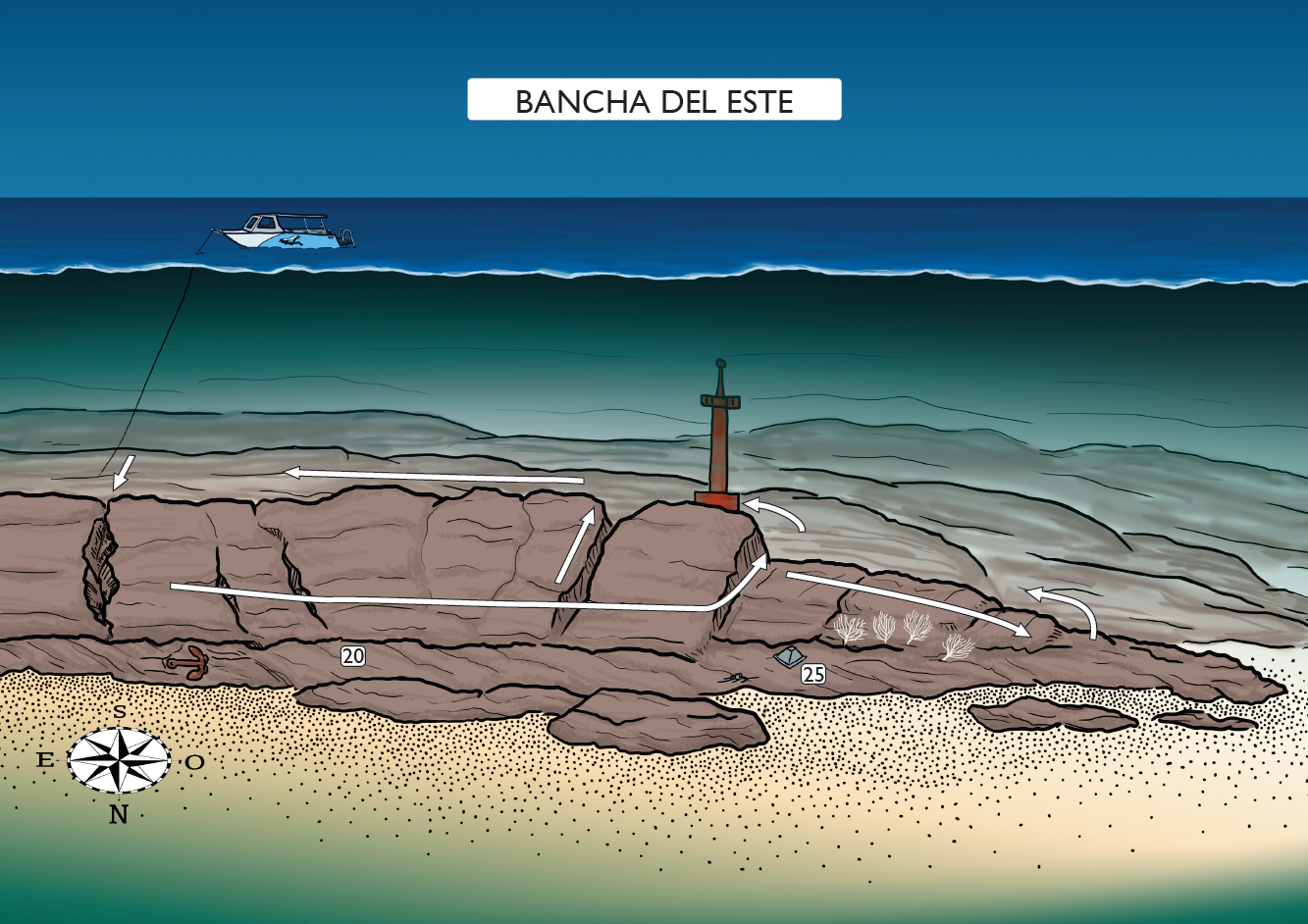
Our boat anchors in the southeastern part of the shallows, at a depth of about 14 m., at the entrance of a tunnel or gallery that crosses the shallows from north to south. The tunnel is very easy to access (as long as there is no swell), due to its size and luminosity. This tunnel allows us to go from one side of the shallows to the other and thus we will have a lot of possibilities to make the dive.
A typical dive would be to go through the tunnel to the north face and head west along the wall, with the wall on the left hand side. As soon as we pass through the tunnel, we find a sort of step at about 18-20 m. and then a drop off to 25 m. If we continue down the step, we can see a merchant anchor lying and conger eels in the crevices of the rocks. On the rocks near the anchor, we have also seen some monkfish.
The Bantxa wall is especially interesting for its abundance of nudibranchs and planarians. It is home to a great variety of them. If you decide to take more water and go to the sandy and rocky area, you can find mosaic rays, perlones, soles,… In this area we would be about 25 m. deep.
Before the shallows end, we will find the Azti weather station, which gives data on temperature, currents, wave height,…A little further on, in the esplanade, is the area where the Navy divers detonated the shells (one of them from the Carlist Wars and the rest from the Civil War) that we had found in this area and that were still with their charge. Attention because there may be more. If we find them, do not touch them.
From this point, (or before, if we so decide) we will pass to the south face of the shallows, and take an easterly direction, returning to the anchorage through the bottom or the ridge, both depths are interesting.
The safety stop can be made at the anchor line or at the crest, which is usually full of life.
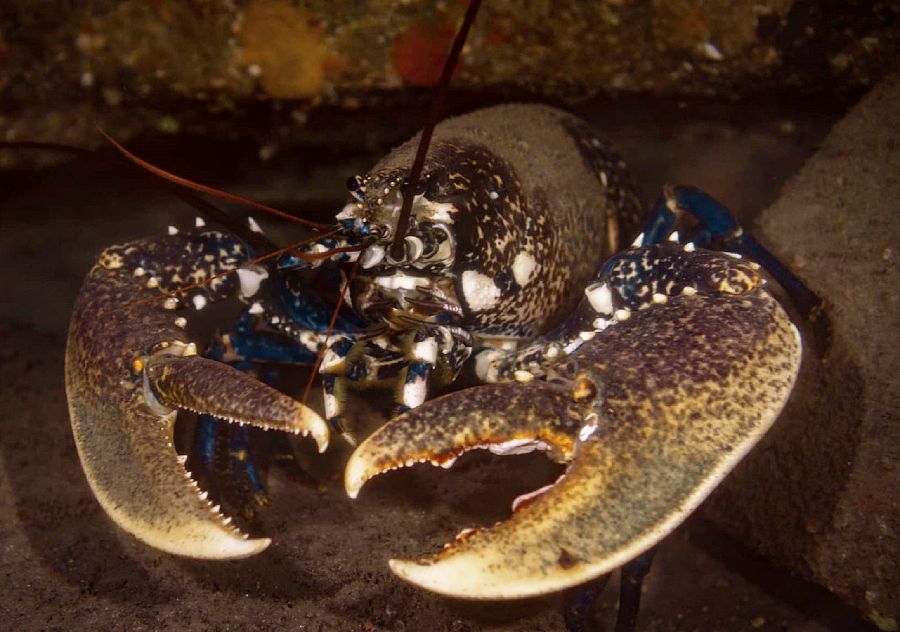
The northern wall is full of planarians, gobies, blennies, spider crabs, conger eels…and above all nudibranchs of all types and colors, which differ depending on the time of the year and the year itself. The northern part of the rocky area is home to scrapers and mosaic rays, cuttlefish, perlones,… The ridge is full of shoals of bogas and grebes, crossbows; and on the slabs of the south side we will see muxarras, crabs, spider crabs, lobsters,…