The dive site will be chosen according to sea conditions and the characteristics of the group.

We are in the closest dive to the exit of the mouth of Pasaia, already in the open sea, heading west, along the slope of Mount Ulia. The mouth is limited by a wall where the silver lighthouse is located with a rocky bottom known as “sasiguchi” that extends in the form of a slab, heading West-East, up to the entrance channel of the ships to the port.
The “Cañonero Tajo” was one of the 10 ships built by the government during the Third Carlist War (1872-1876), when the government built 10 gunboats. Specifically the “Tajo” patrolled the Cantabrian coasts. It was an iron ship, with 2 cannons and a coal engine.
Once the war was over, these ships were distributed among the different navy commands to serve as coast guard ships, and “El Tajo” was assigned to the San Sebastián command.
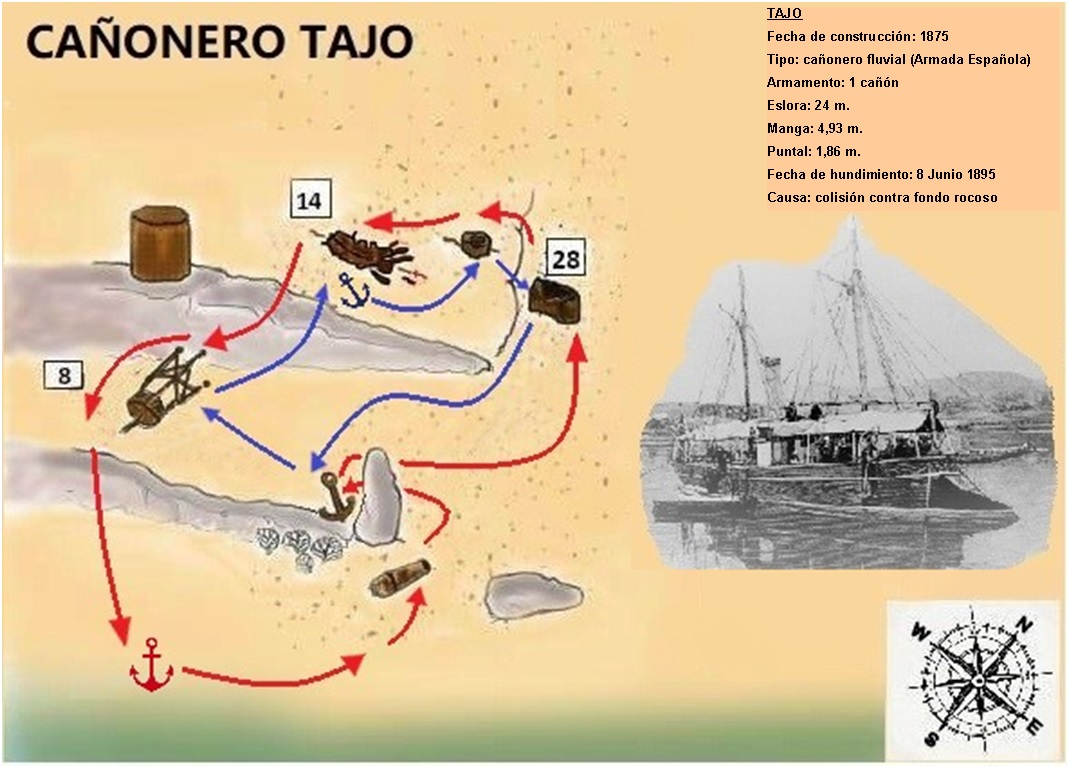
On June 8, 1895, in one of the early mornings of return, “El Tajo”, due to poor visibility, ran into the rocky area “sasiguchi” and sank without the possibility of re-floating.
The boat will anchor at a depth of 7-10m, depending on the tide. The first thing we find are the remains of the “Tajo”. If we look closely, we can see the skeleton of the ship, with a length of 24m.
The dive will be made in an easterly direction. Throughout the area we will be able to observe the remains of the scattered gunboat. If we follow this direction, we will reach the channel, at about 26 m. There we will find the remains of the ship’s boiler, which have been displaced due to the different storms. Once in the channel, we will head south, going around the end of the slab. In this area we can find sole in the sand and spider crabs in the slab.
If we continue sailing south, we will find the largest anchor of the sine, from the XVIII century. From there we will take a northwesterly course, going up to a depth of 10-12m, arriving at the sunken turret, the outer beacon of the entrance channel to the port. This area is plagued by torpedoes.
The return to the ship is done in the opposite direction, i.e., eastward, until reaching the channel, going around the slab and ascending the same to the gunboat, heading west.
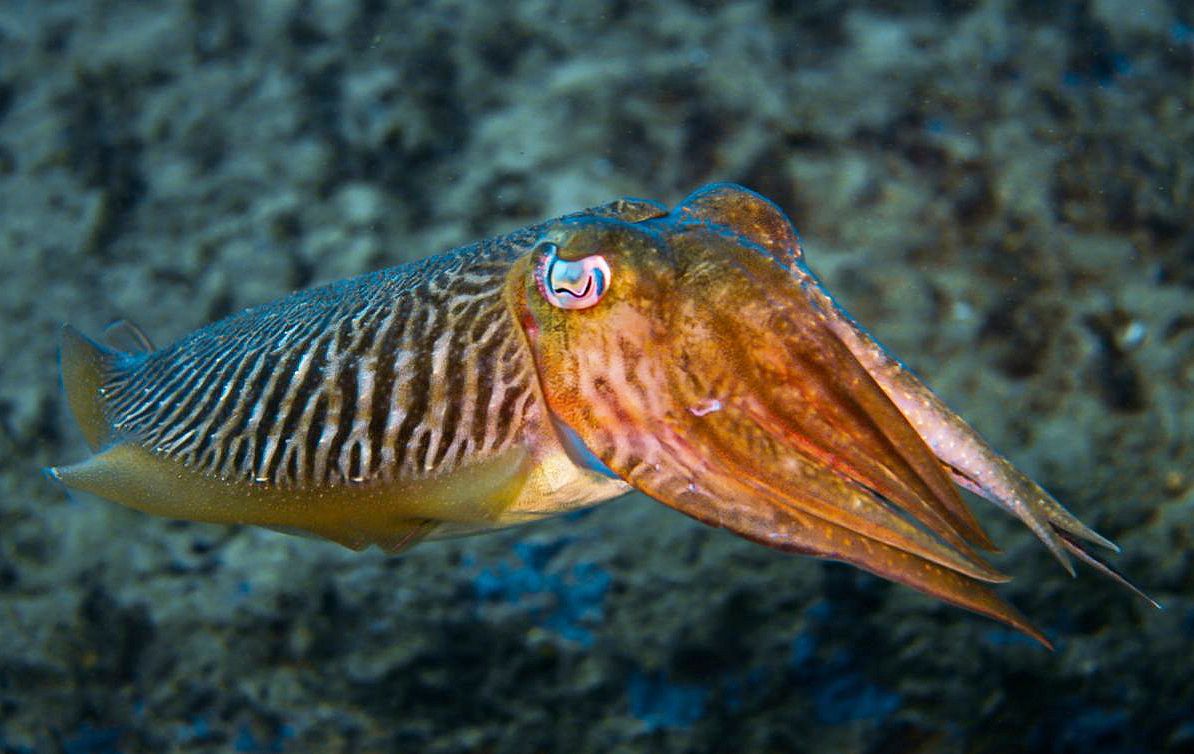
On the crest of the slab you can find countless schools of fish, triggerfish and St. Peter’s fish. On the walls and rocks, conger eels, spider crabs, nudibranchs and cuttlefish. In the remains of scrap metal and engine blocks it is not difficult to find spider crabs and even lobsters.