
We named this dive because we discovered it one day when we were out diving and our boat broke down near this area. There were two options: stay on the boat in the sun while the other boat came to our aid, or go down and try to do an R & D dive. On our way down, we found a very interesting bottom, and after investigating it a bit more, it was added as a dive site.
Astillero is a slab or rocky arm located at the back of Mount Ulia. This point has an east-west orientation like almost all the slabs in the area. From the 3-5 m. that can have the highest peaks of the ridge, it descends to 30-32m on its north face, and continues descending the further north we go. On its south face we get a little shallower (about 25m).
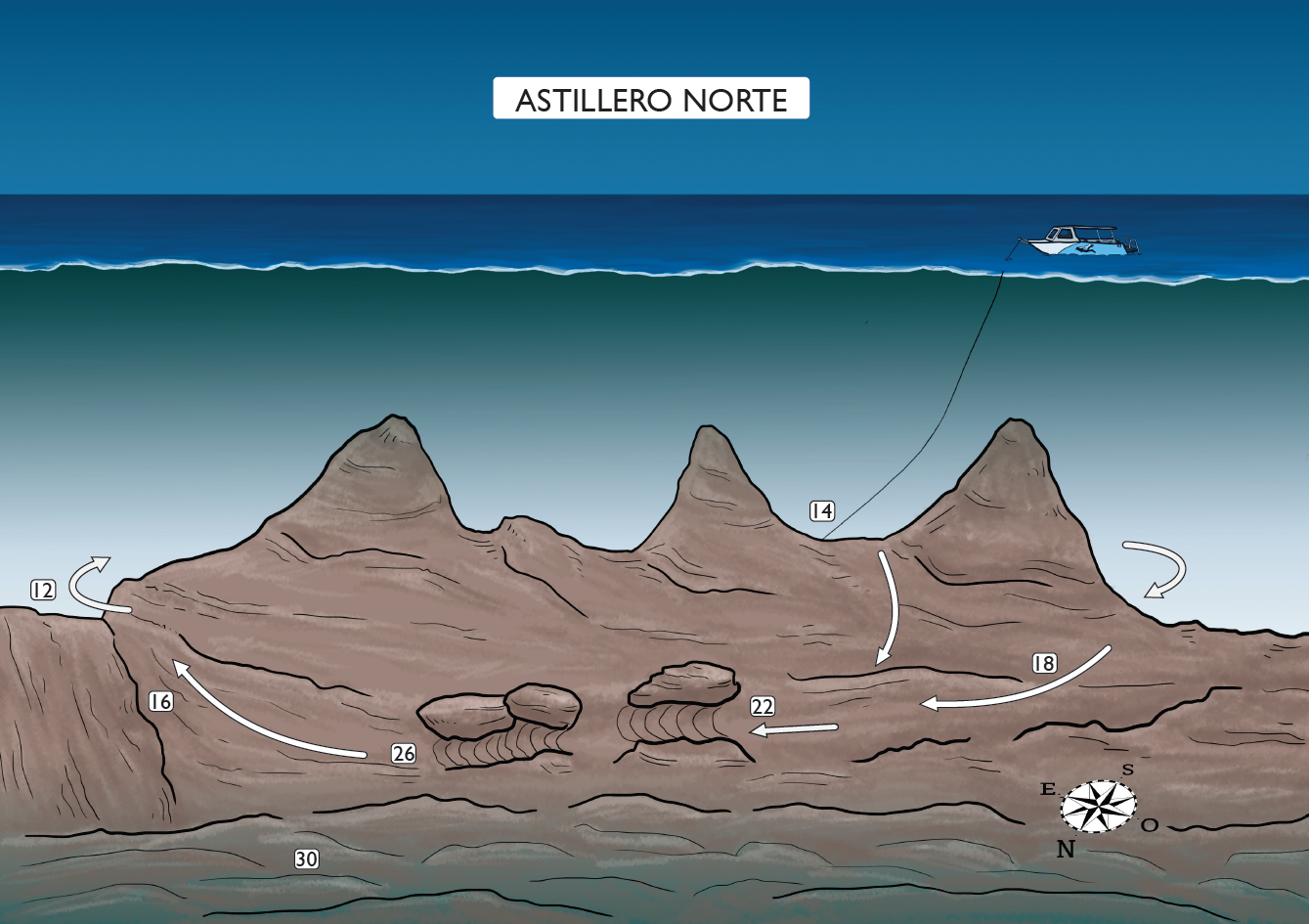
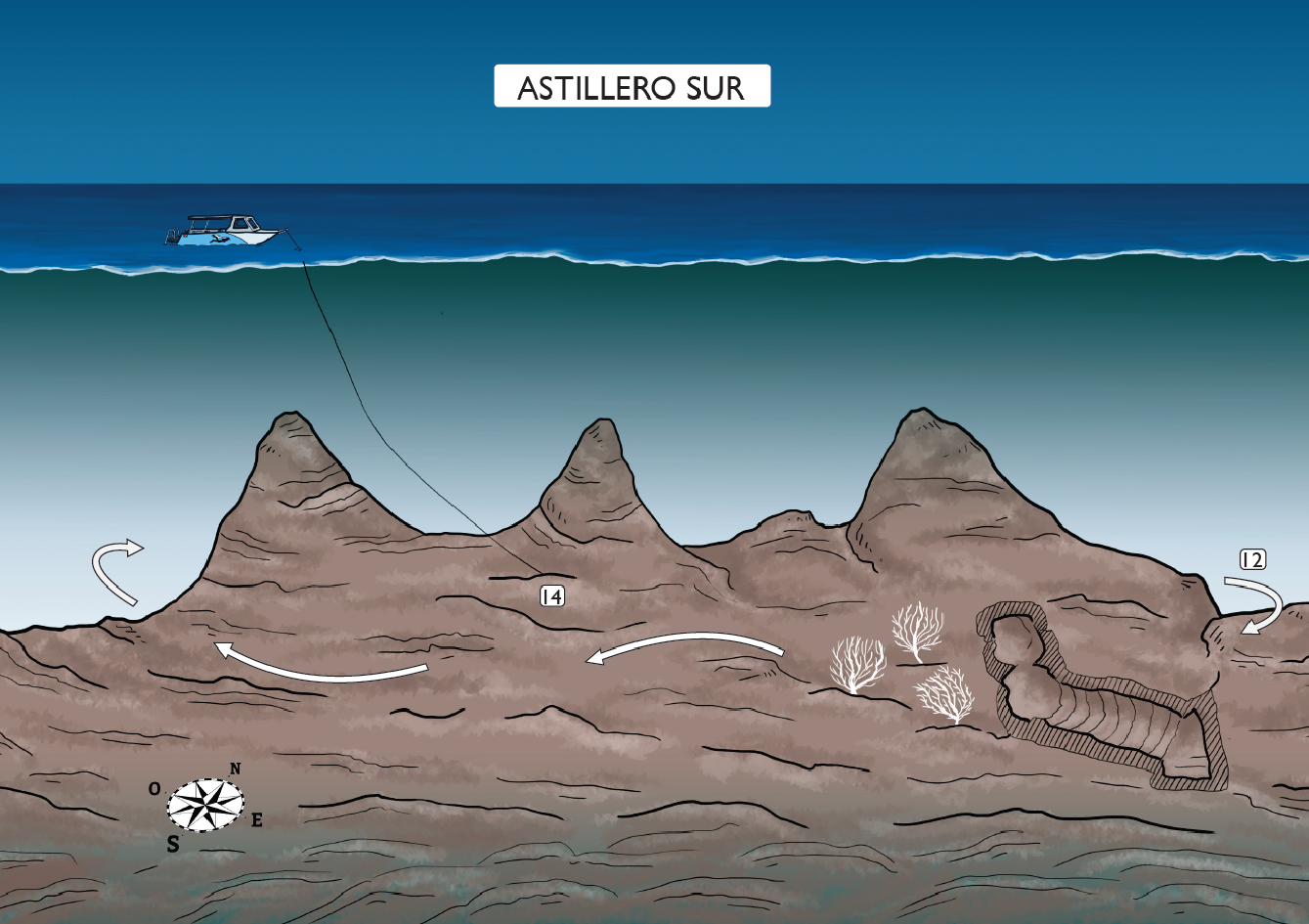
The anchorage is usually located on the south side of the shallows, at a depth of 10-12m, in a V-shaped cut.
A typical dive would be to descend down the north face of the shallows and pull eastward with the right arm against the wall. Do not get too far away from the main wall, or you will be getting too deep (you will soon be over 34-36 m).
As soon as we sail a few meters, we will find a small rock arch at about 25 m. We can pass under it without any problem or fly over it.
A little further on, we will find small cuevecitas or holes with and without exit at about 30-32 m. deep. Interesting area to look for lobsters on the roof. In addition, we will be observing the cracks in the path where there are usually conger eels and spider crabs. In this area we can also see shells embedded in the wall, found when leaving the second passage of caves. The projectiles are believed to be from the First World War of those that were launched manually from airplanes.
From this point, and after examining the “cuevecitas” area (both on one side and the other), we will begin our ascent up the wall looking for shallower water. We will continue eastward, with the wall to the right, until we find a deep cut in the wall. This may be a good spot to move to the south face of the bajo. In this area a conger eel usually hides in a very narrow crack.
On the south face we will find another hole about 23 m. deep. It is perfect for those who like to “ratonear”, since it is narrower and longer than the previous ones. A priori it seems to have no exit, since the passage is a little curved, but we can cross it without problem.
We will return in a westerly direction towards the anchorage, either along the wall or along the ridge, if we need less depth.
If we reach the anchorage with enough air, we can continue sailing west, where the low will gradually disappear.
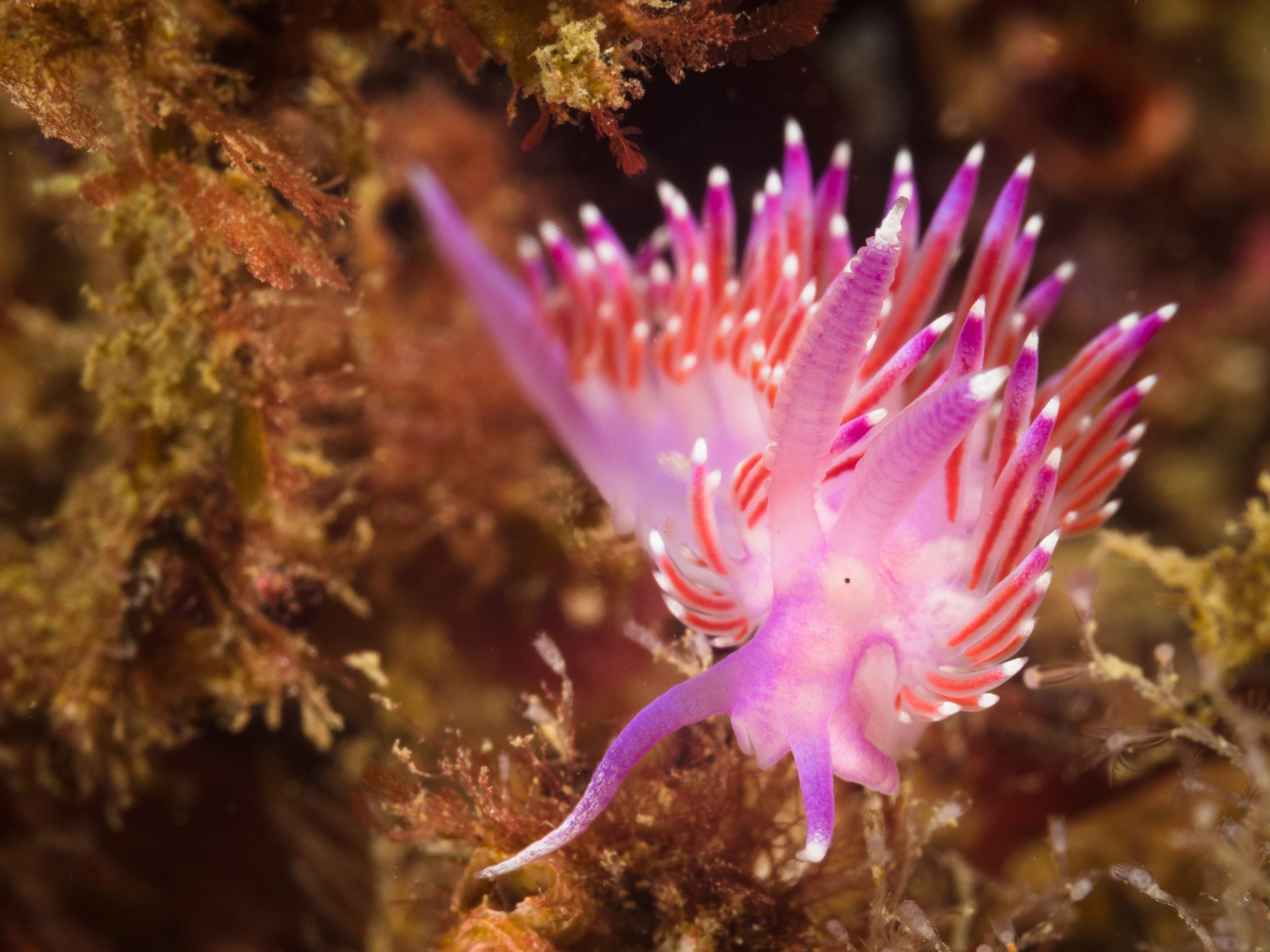
In the “cuevecitas” and passages it is usual to find a lot of crustaceans: lobsters, spider crabs, crabs… Conger eels especially in the cracks of the wall. Look for octopus in the holes, and if it is the season, there are also sunfish. The area is full of beautiful gorgonians, especially on the bottom, and on the walls we will not miss nudibranchs. On the ridge, sea hares, gobies and blennies, and a multitude of chicharros bamcos and bogas.